Turn any webpage into Markdown. Keep only the parts you need.
Pick Markdown is a free browser extension. Open a page, tick the sections you want, and copy them as clean Markdown, ready to paste into ChatGPT, Claude, Notion or Obsidian.
- 1Open the page
- 2Tick the sections
- 3Copy as Markdown
Not in the Chrome Web Store yet. The install page has the status.
- Keeps
- Headings
- Lists
- Tables
- Code blocks
- Links
- Image links
- A link back to the page
Copy a webpage as Markdown in three steps.
Open any page
Click the Pick Markdown icon on an article, a documentation page, a wiki or a forum thread. It reads the page and lays it out as a clean document: no ads, no menus, no cookie banners.
Tick what you need
Every heading gets a checkbox. Tick one section or ten; nothing ticked means the whole page. Trim a paragraph before you copy if you like.
Copy or download
Clean Markdown lands in your clipboard with a link back to the page. Or download a .md file for your notes. Paste it anywhere that takes text.
Try it on a real page.
This is NASA’s student explainer on black holes, captured with Pick Markdown. Tick a section or two, then copy. Everything runs in this page; nothing is uploaded.
What Is a Black Hole? (Grades 5-8)
How Big Are Black Holes?
Black holes can come in a range of sizes, but there are three main types of black holes. The black hole’s mass and size determine what kind it is.
The smallest ones are known as primordial black holes. Scientists believe this type of black hole is as small as a single atom but with the mass of a large mountain.
The most common type of medium-sized black holes is called “stellar.” The mass of a stellar black hole can be up to 20 times greater than the mass of the sun and can fit inside a ball with a diameter of about 10 miles. Dozens of stellar mass black holes may exist within the Milky Way galaxy.
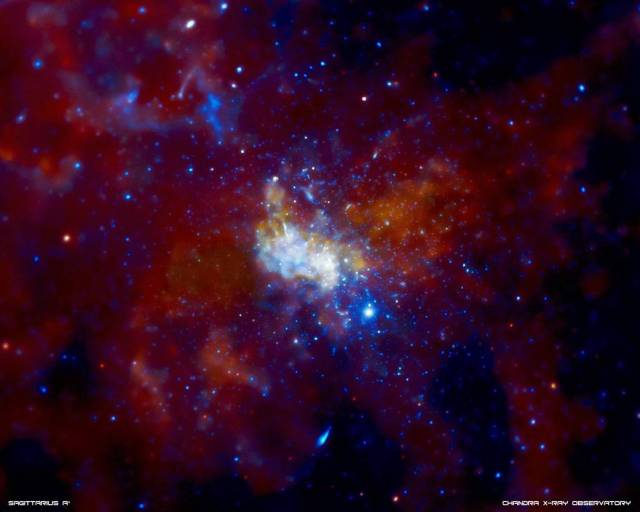
The largest black holes are called “supermassive.” These black holes have masses greater than 1 million suns combined and would fit inside a ball with a diameter about the size of the solar system. Scientific evidence suggests that every large galaxy contains a supermassive black hole at its center. The supermassive black hole at the center of the Milky Way galaxy is called Sagittarius A. It has a mass equal to about 4 million suns and would fit inside a ball with a diameter about the size of the sun.
How Do Black Holes Form?
Primordial black holes are thought to have formed in the early universe, soon after the big bang.
Stellar black holes form when the center of a very massive star collapses in upon itself. This collapse also causes a supernova, or an exploding star, that blasts part of the star into space.
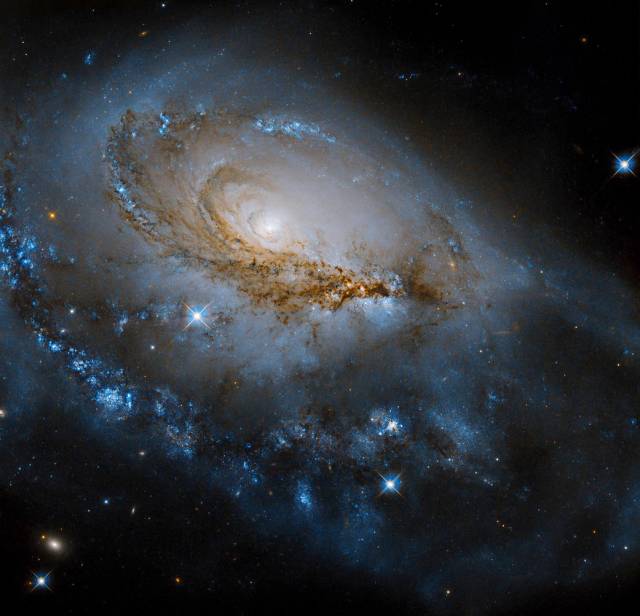
Scientists think supermassive black holes formed at the same time as the galaxy they are in. The size of the supermassive black hole is related to the size and mass of the galaxy it is in.
If Black Holes Are “Black,” How Do Scientists Know They Are There?
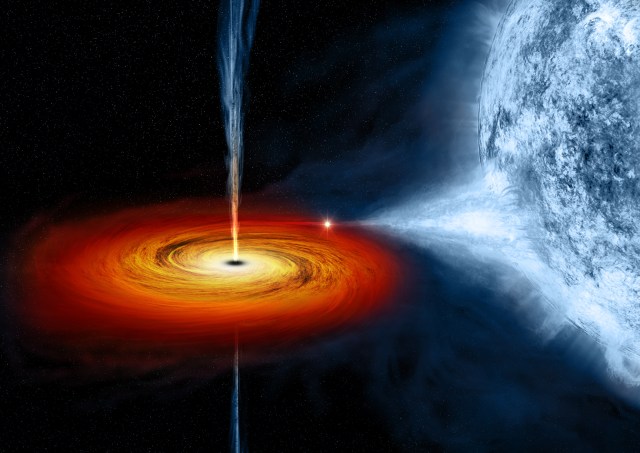
A black hole cannot be seen because of the strong gravity that is pulling all of the light into the black hole’s center. However, scientists can see the effects of its strong gravity on the stars and gases around it. If a star is orbiting a certain point in space, scientists can study the star’s motion to find out if it is orbiting a black hole.
When a black hole and a star are orbiting close together, high-energy light is produced. Scientific instruments can see this high-energy light.
A black hole’s gravity can sometimes be strong enough to pull off the outer gases of the star and grow a disk around itself called the accretion disk. As gas from the accretion disk spirals into the black hole, the gas heats to very high temperatures and releases X-ray light in all directions. NASA telescopes measure the X-ray light. Astronomers use this information to learn more about the properties of a black hole.
Could a Black Hole Destroy Earth?
Black holes do not wander around the universe, randomly swallowing worlds. They follow the laws of gravity just like other objects in space. The orbit of a black hole would have to be very close to the solar system to affect Earth, which is not likely.
If a black hole with the same mass as the sun were to replace the sun, Earth would not fall in. The black hole with the same mass as the sun would keep the same gravity as the sun. The planets would still orbit the black hole as they orbit the sun now.
_________________________________________________________________________________________
Words to Know
red giant star: a star that is larger than the sun and red because it has a lower temperature
white dwarf star: a small star, about the size of Earth;
one of the last stages of a star’s life
_________________________________________________________________________________________
Will the Sun Ever Turn Into a Black Hole?
The sun does not have enough mass to collapse into a black hole. In billions of years, when the sun is at the end of its life, it will become a red giant star. Then, when it has used the last of its fuel, it will throw off its outer layers and turn into a glowing ring of gas called a planetary nebula. Finally, all that will be left of the sun is a cooling white dwarf star.
How Is NASA Studying Black Holes?
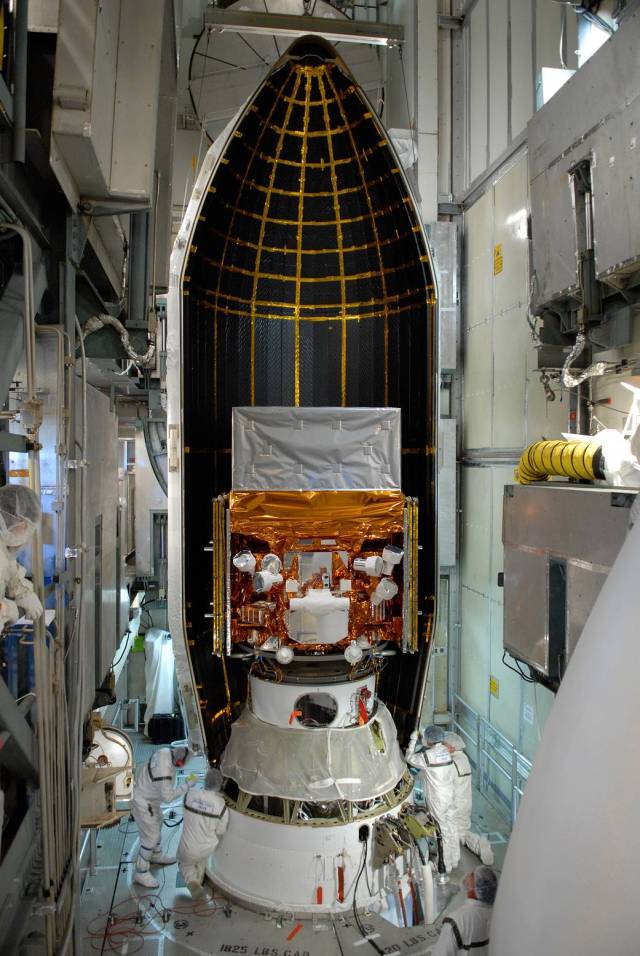
NASA is learning about black holes using spacecraft like the Chandra X-ray Observatory, the Swift satellite, and the Fermi Gamma-ray Space Telescope. Fermi launched in 2008 and is observing gamma rays – the most energetic form of light – in search of supermassive black holes and other astronomical phenomena. Spacecraft like these help scientists answer questions about the origin, evolution and destiny of the universe.
Embedded content: 5 Things: Black Holes
Who Studies Black Holes?
Are you interested in a career that studies black holes? Many different types of researchers study black holes. Here are a few examples:
Astrophysicist: These scientists study the physics of the universe. They are interested in learning how the universe began, how it is evolving, and how it works. Click here to learn more about NASA’s Astrophysics Division.
Computer Scientist: These scientists study ways to use computers to solve problems. They might create new software, research theoretical concepts, or develop algorithms. Computer scientists developed algorithms to sort telescope data during the process of capturing the historic first image of a black hole.
More About Black Holes
NASA’s Guide to Black Hole Safety
Ask an Astrophysicist: Black Holes
Black Holes: By the Numbers Slideshow
Read What Is a Black Hole? (Grades K-4)
[
Explore More for Students Grades 5-8
Visual content: No text description available
](https://www.nasa.gov/learning-resources/for-students-grades-5-8/)
Text and images: What Is a Black Hole? (Grades 5-8), nasa.gov, captured 2026-10-07. NASA STEM Team; NASA content is generally not subject to copyright.
Nothing ticked means the whole sample goes: all 8 sections, with 4 images as links.
Runs in your browser. This is exactly what the extension copies for this selection.
Screenshots cost tokens. Text costs less.
AI tools count what you send in tokens. A screenshot of a page is thousands of them; the same page as text is a few hundred; one section is fewer still. Smaller input leaves more room for the answer, and costs less if you pay per token.
The page: What Is a Black Hole? (Grades 5-8), 8 screens long. The question: could a black hole destroy Earth?
- Screenshots13,728 tokens
8 pictures of the page. The AI reads the words off pixels and pays for every blank margin.
- Copy all the text≈2,800 tokens
Every word on the page as text, nothing else. About 5× less than the pictures.
- Tick one sectionPick Markdown≈370 tokens
Only the section that answers the question, with a link back to the page. About 37× less than the pictures.
Why the gap: a picture is charged per 28-pixel square, blank space included. Text is charged per word, and one section is simply fewer words.
Counted for Claude Opus 5.5 on 7 Oct 2026. Pictures by Anthropic’s published rule; text estimated at four characters per token. See the method and download the files →
Paste a webpage into your AI, your notes or your editor.

Convert without the extension.
Free converters, no sign-up. The HTML converter runs in your browser today; the link converter is on its way.
From the blog.
Guides and real numbers, in plain words. Sample articles are marked until they are written and tested.
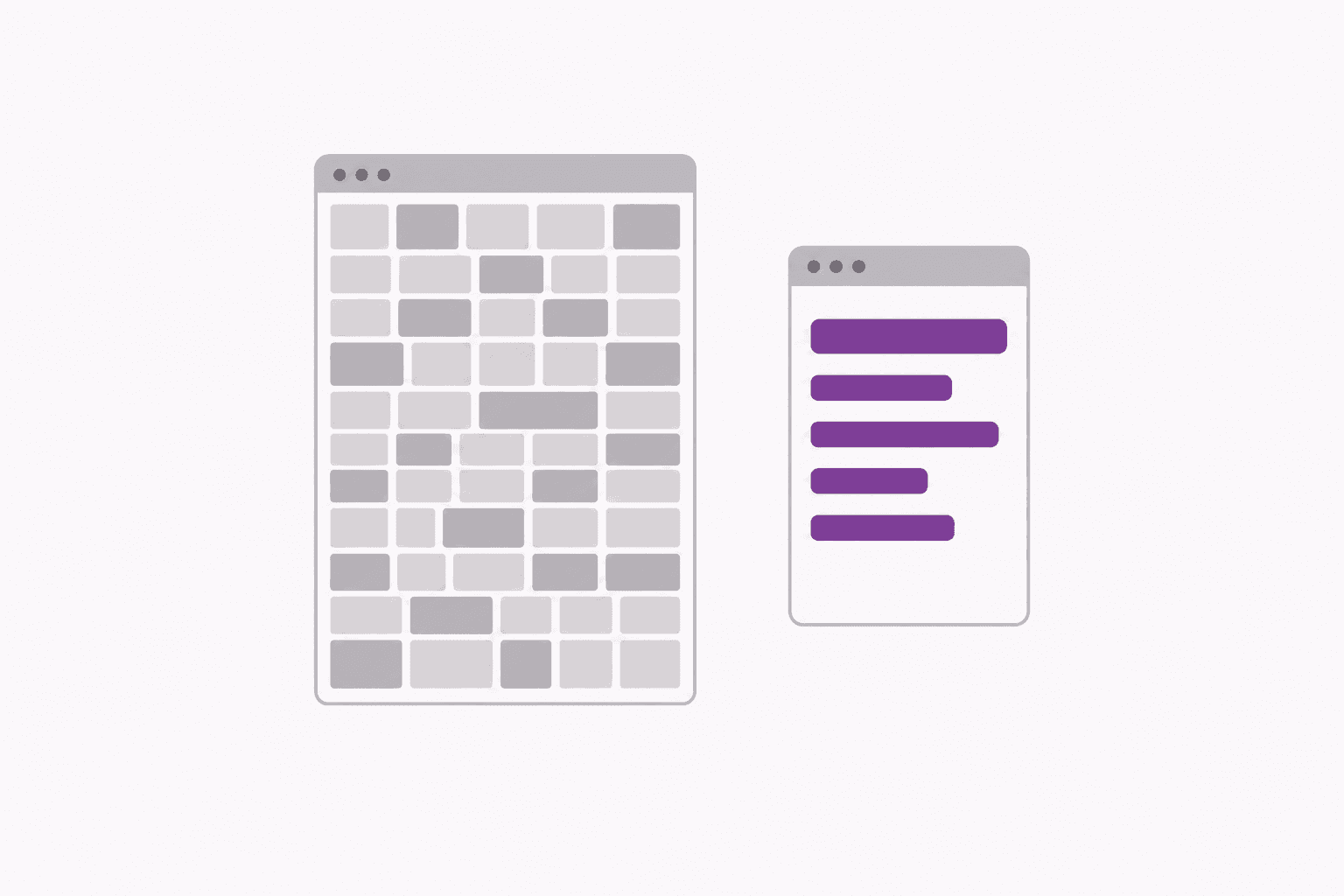 ComparisonScreenshot vs text: how many tokens does a webpage cost an AI?We counted one real page three ways: as screenshots, as all of its text, and as one section. The numbers, how we got them, and the files so you can check.
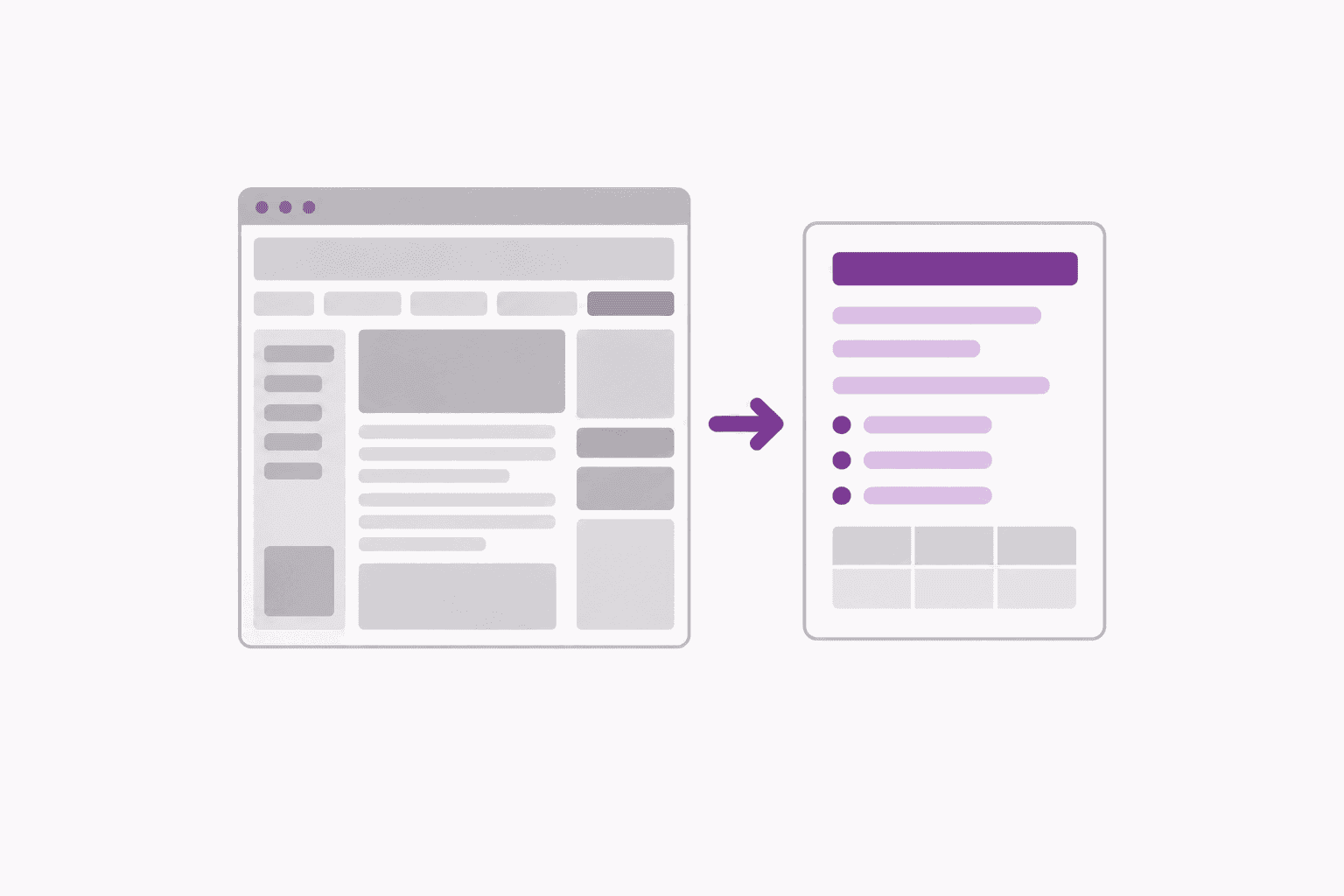 GuideHow to turn a webpage into MarkdownThree ways to do it, what converts cleanly and what does not, and a real before-and-after from a NASA page, with the .md file to download.
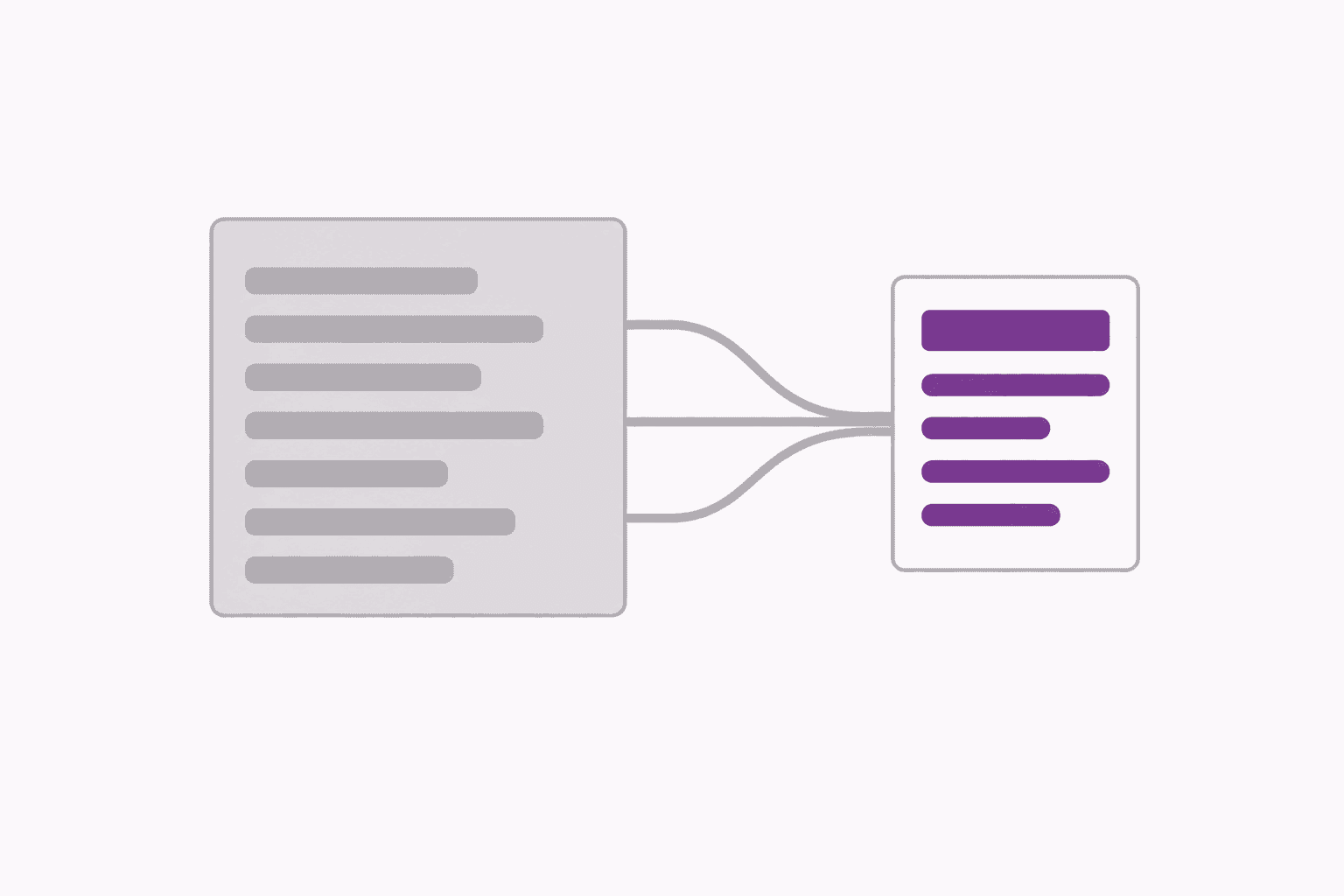 GuideHow to save a webpage as Markdown: three waysWith an extension, with a free converter, or by pasting. Which one to use when, and what each one keeps.
Common questions.
How do I convert a webpage to Markdown?
Install Pick Markdown, open the page and click the icon. Tick the sections you want and press Copy. No extension yet? Paste the page into the free HTML to Markdown converter instead.
What is Markdown, and why do AI tools like it?
Markdown is plain text with simple marks for headings, lists, links and tables. It stays readable, keeps the structure of the page, and takes far fewer tokens than a screenshot, so answers come back cheaper and more accurate.
Can I copy just one part of a page?
Yes. Every heading gets a checkbox. Tick one section, a few, or none to take the whole page. You can also trim a paragraph before you copy.
Does it work on every website?
Most articles, documentation, wikis and blog posts. Pages that load as you scroll or hide text behind tabs may come through partially; Pick Markdown tells you where it stopped and lets you collect more.
Is anything uploaded?
No. Reading and converting the page happen on your device. Where you paste the Markdown afterwards is your choice, and that service’s rules apply.
Are images included?
As links to the original image, with their captions, not as pixels. If the meaning is in the picture, send the picture too.
Does this make my ChatGPT subscription cheaper?
Not the monthly price. Sending less text leaves more room in your usage limits and in the conversation. If you pay per token through an API, fewer tokens does cost less.
Which browsers, and what does it cost?
Free. Desktop Chrome first; Firefox and Safari are in progress. There is no mobile version.
Copy your first page as Markdown.
Free. Desktop Chrome first; Firefox and Safari in progress.