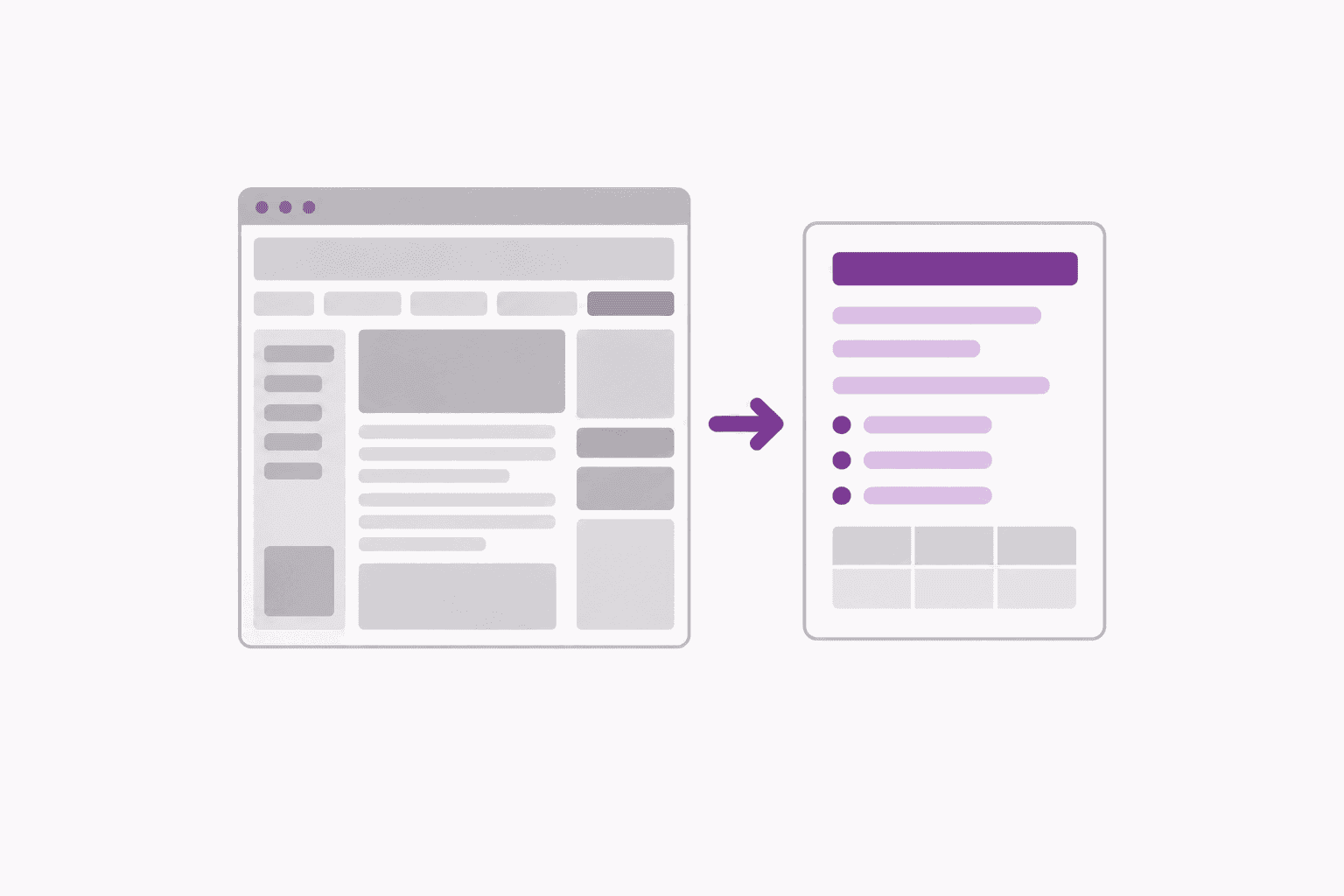
Why there is no single number
AI models do not charge per word in a picture. They charge per picture, by rules that depend on the model, the picture’s size in pixels and, with some providers, a detail setting. OpenAI’s image guide gives estimates that change with model, size and detail level. Anthropic’s vision guide gives a rule per model: for Claude 4.7 and later, the picture is shrunk until its long side is at most 2,576 pixels, then counted at one token per 28 by 28 pixel square, with a cap of 4,784 tokens. We read both on 7 October 2026; read them again before you quote a number.
Two things follow. A tall screenshot of a long article gets shrunk, so its cost does not grow with the amount of text in it; past a point the words just stop being readable. And a short paragraph as text can cost fewer tokens than the smallest useful picture, while a very long passage as text can cost more than one screenshot of it. So an honest comparison names one model and shows which way the numbers actually went.
Two comparisons, kept apart
Picture or text. The same passage, once as a screenshot and once as text. This tells you what a picture costs compared with text for the same content. The text row has to include everything that would really be sent: the Markdown marks, headings, links, the source line, any notes.
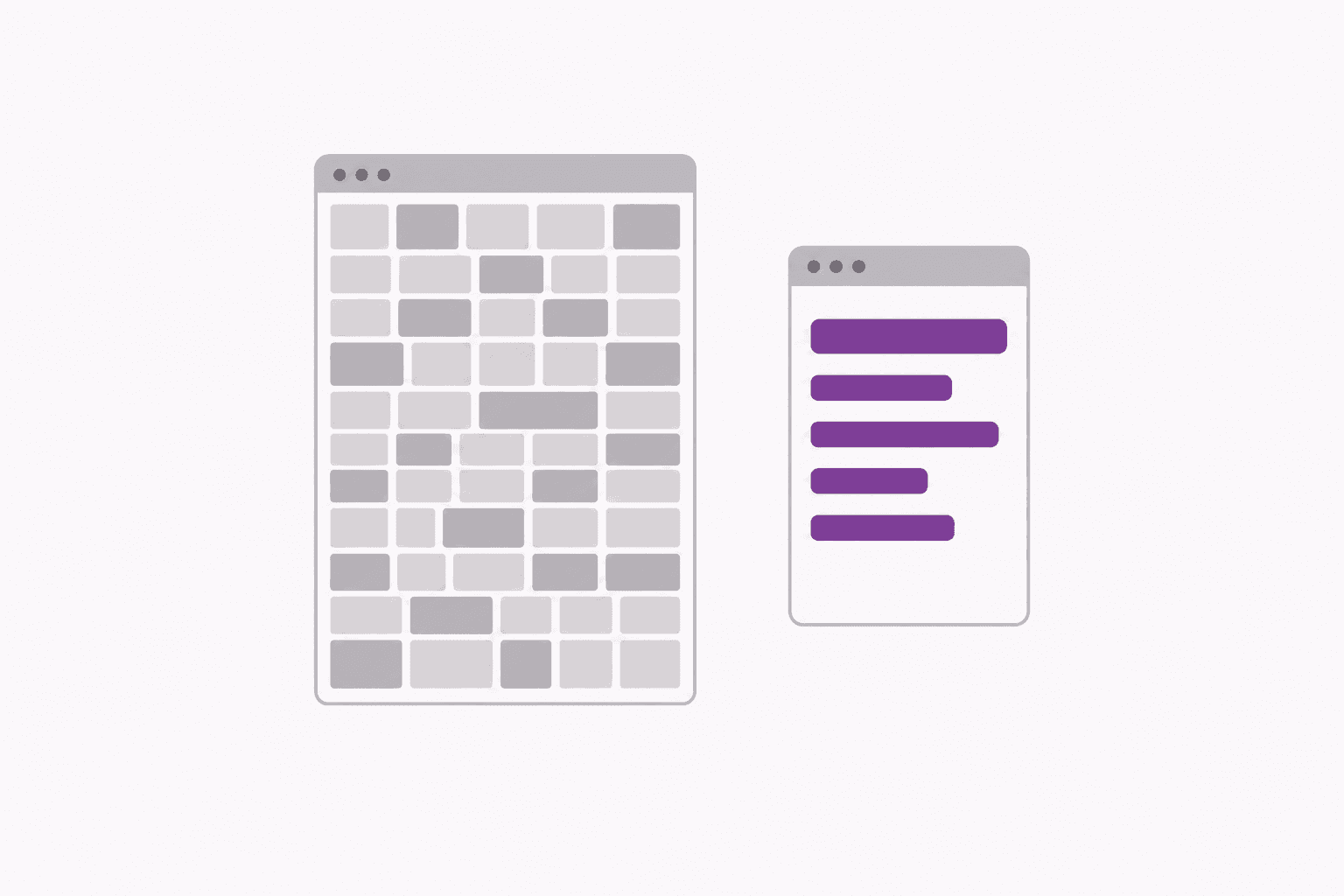
Whole page or one section. All of the page as text against only the sections you ticked. The ticked text is smaller because it says less, not because of its format. Giving the credit for that saving to “Markdown conversion” would be wrong, and we do not.
vs
The section as text
vs
One section as text
The page we used
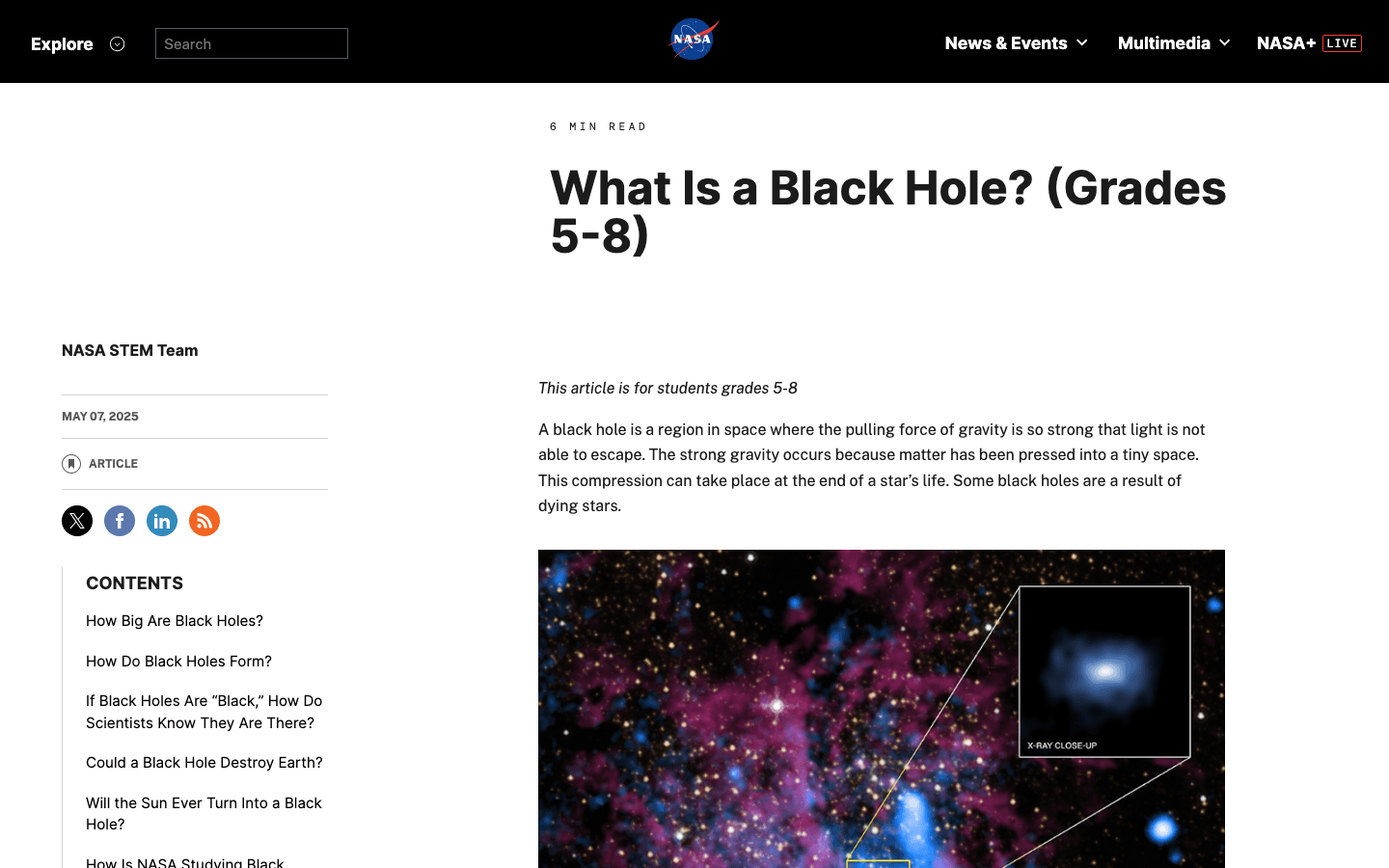
A real public page, the same one as the demo on the home page: What Is a Black Hole? (Grades 5-8) on nasa.gov, an explainer written for students (NASA STEM Team; NASA content is generally not subject to copyright.). It is 8 screens tall at 1,440 by 900 pixels and has 11 sections with 5 pictures. The section we ticked is “Could a Black Hole Destroy Earth?” (143 words), the part someone would actually ask an AI about. Both files are published as they came out, so anyone can count them again with their own tool.
How we counted
- Name the provider, the model and the date. Counts only compare within one model.
- Open the page at a normal desktop width. Note how many screenshots it takes, their size in pixels and how the provider shrinks them. Work out the picture tokens by that provider’s published rule, or measure them.
- Send the exact text of each text row and note the token count the provider reports. Until that is done, say so: the current table estimates text at four characters per token and is labelled as an estimate.
- Keep any extra prompt text the same in every row, or leave it out. The answer’s tokens are not part of this comparison.
- If money is shown, use the model’s published input price, say it is input only, and never read anything into a chat subscription from it. We show no money.
- Publish the files, the screenshots and the numbers together, with the date, so anyone can repeat it.
Results
Picture counts follow the published rule applied to the exact screenshots. Text counts are estimates until the provider’s own counts replace them; the badge on the table says which it is. The pictures first, then the table.
Tokens are how an AI model counts what you send it. Words, pictures and even blank space all turn into tokens, and your usage, limits and bill are measured in them. Here is one real page, counted three ways.
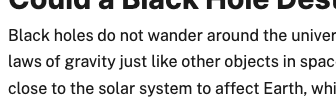
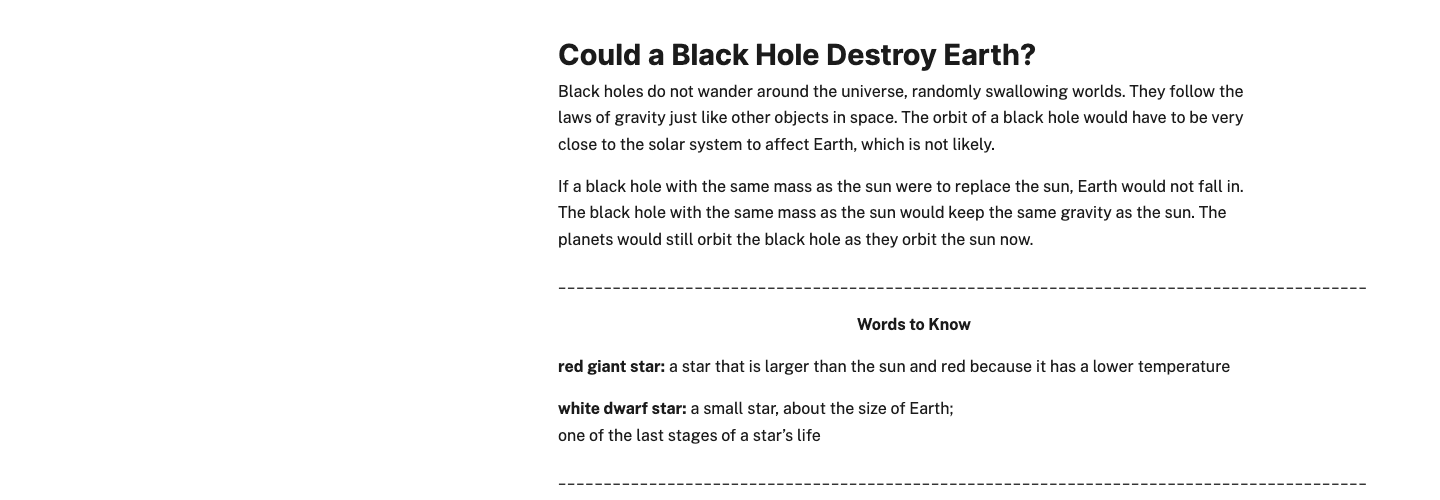 1 image · 936 tokens
A screenshot of one section, 1,440 × 500 pixels. The model has to read the words off the picture, and it is charged for every pixel of margin around them.
# What Is a Black Hole? (Grades 5-8) - NASA

Source: <https://www.nasa.gov/learning-resources/for-kids-and-students/what-is-a-black-hole-grades-5-8/>

> Capture notes: Embedded content was retained as a reference; its contents were not extracted. Some visual content has no extracted text; available descriptions are retained.

## What Is a Black Hole? (Grades 5-8)

### Could a Black Hole Destroy Earth?

Black holes do not wander around the universe, randomly swallowing worlds. They follow the laws of gravity just like other objects in space. The orbit of a black hole would have to be very close to the solar system to affect Earth, which is not likely.

If a black hole with the same mass as the sun were to replace the sun, Earth would not fall in. The black hole with the same mass as the sun would keep the same gravity as the sun. The planets would still orbit the black hole as they orbit the sun now.

\_\_\_\_\_\_\_\_\_\_\_\_\_\_\_\_\_\_\_\_\_\_\_\_\_\_\_\_\_\_\_\_\_\_\_\_\_\_\_\_\_\_\_\_\_\_\_\_\_\_\_\_\_\_\_\_\_\_\_\_\_\_\_\_\_\_\_\_\_\_\_\_\_\_\_\_\_\_\_\_\_\_\_\_\_\_\_\_\_

**Words to Know**

**red giant star:** a star that is larger than the sun and red because it has a lower temperature

**white dwarf star:** a small star, about the size of Earth;
one of the last stages of a star’s life

\_\_\_\_\_\_\_\_\_\_\_\_\_\_\_\_\_\_\_\_\_\_\_\_\_\_\_\_\_\_\_\_\_\_\_\_\_\_\_\_\_\_\_\_\_\_\_\_\_\_\_\_\_\_\_\_\_\_\_\_\_\_\_\_\_\_\_\_\_\_\_\_\_\_\_\_\_\_\_\_\_\_\_\_\_\_\_\_\_
What the extension copies: the heading, the words, the links and a source line pointing back to the page. 1,495 characters, ≈ 374 tokens, about 2.5× less than the picture of it.
 1,716 squares = 1,716 tokens
An image is cut into 28-pixel squares and every square costs one token, whether it holds a word, a menu or nothing. On this screen only 886 of the 1,716 squares contain anything; the other 48% is empty space you still pay for.
A screenshot shows one screen. This page is 8 screens tall, so sending all of it as pictures is 8 images: 13,728 tokens. The same words as text are ≈ 2,797 tokens, less than three screenshots’ worth. On a Retina display each screenshot is about 4,644 tokens, so the gap widens to 37,152.
A single full-page screenshot is not a way out: the provider shrinks it to 532 × 2,576 pixels, where the text is unreadable.
What the model receives
Estimated · text ≈ 4 chars per tokenClaude Opus 5.5 · 2026-10-07| Input | Content | Input tokens | How obtained |
|---|---|---|---|
| Same section, two formats | |||
| Screenshot of the section | 1 image, 1,440 × 500 px | 936 | Pixel size × Anthropic’s documented image rule |
| The section as text | 1,495 characters, source line included | ≈ 374 | Exact file, characters ÷ 4 |
| Same format (text), two scopes | |||
| Whole page as text | 11,187 characters, 11 sections | ≈ 2,797 | Exact file, characters ÷ 4 |
| The section as text | 1,495 characters, source line included | ≈ 374 | Exact file, characters ÷ 4 |
| For scale: the whole page as pictures | |||
| Whole page as screenshots | 8 images, 1,440 × 900 px each | 13,728 | Pixel size × Anthropic’s documented image rule |
- Page
- What Is a Black Hole? (Grades 5-8) - NASA (nasa.gov)
- Section
- “Could a Black Hole Destroy Earth?” · 143 words
- Screenshots
- 1,440 × 900 px at 1×; a Retina (2×) screen is 4,644 tokens each
- Image rule
- Anthropic Vision docs, Claude 4.7 and later: ceil(width/28) × ceil(height/28) tokens, long edge scaled to 2,576 px, capped at 4,784 tokens per image.
- Text
- Estimated at four characters per token from the exact published files; provider-reported counts will replace the estimates.
- Overhead
- Prompt overhead excluded from every row; output tokens are outside this comparison.
What this means for a subscription
Token prices are what developers pay per token through an API. They say nothing about a chat subscription’s monthly fee, its limits or how many messages you get. Sending fewer tokens can leave more room inside a limit, but no extension can lower a fixed monthly price, and we will not claim it does.